
Key takeaways:
- Bitcoin’s steady outflows in the spot ETF and the strength of the U.S. dollar reduce the risk of a quick rebound to $65,000.
- The AI sector’s sturdy earnings momentum and higher fixed-income returns are attracting capital from Bitcoin and gold.
Bitcoin (BTC) reacted positively to US Federal Reserve Chairman Kevin Warsh’s comments on persistent inflation. Despite Wednesday’s gains, investors fear that incentives for fixed-income investments and sturdy earnings momentum in technology stocks will continue to put pressure on non-income assets such as cryptocurrencies.
US 5-year Treasury yield (left) vs. Bitcoin/USD. Source: TradingView
The US 5-year Treasury bond yield rose to 4.22%, indicating that investors were demanding higher returns from holding government bonds. Even if inflation eventually subsides and WTI oil prices fall to their lowest level in 4 months, investors expect monetary expansion. Regardless of how the Fed manages interest rates and its balance sheet, the US Treasury dictates debt issuance trends.
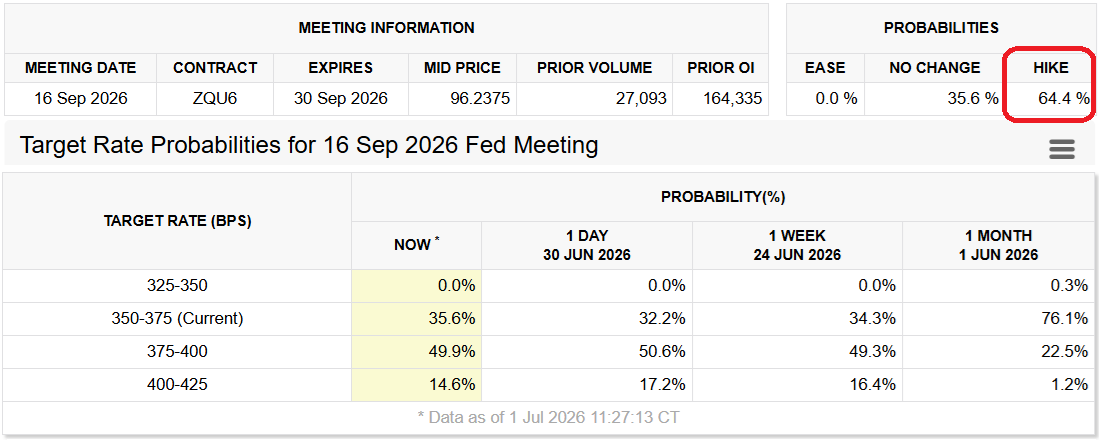
Fed implied interest rates as of September 16. Source: CME FedWatch Tool
US government bond futures implied a 64% probability of an interest rate hike by September, up from 23% a month earlier. The higher expected return on fixed income investments came as the US dollar strengthened against other major global fiat currencies, which is particularly concerning for alternative hedging instruments such as gold and Bitcoin.
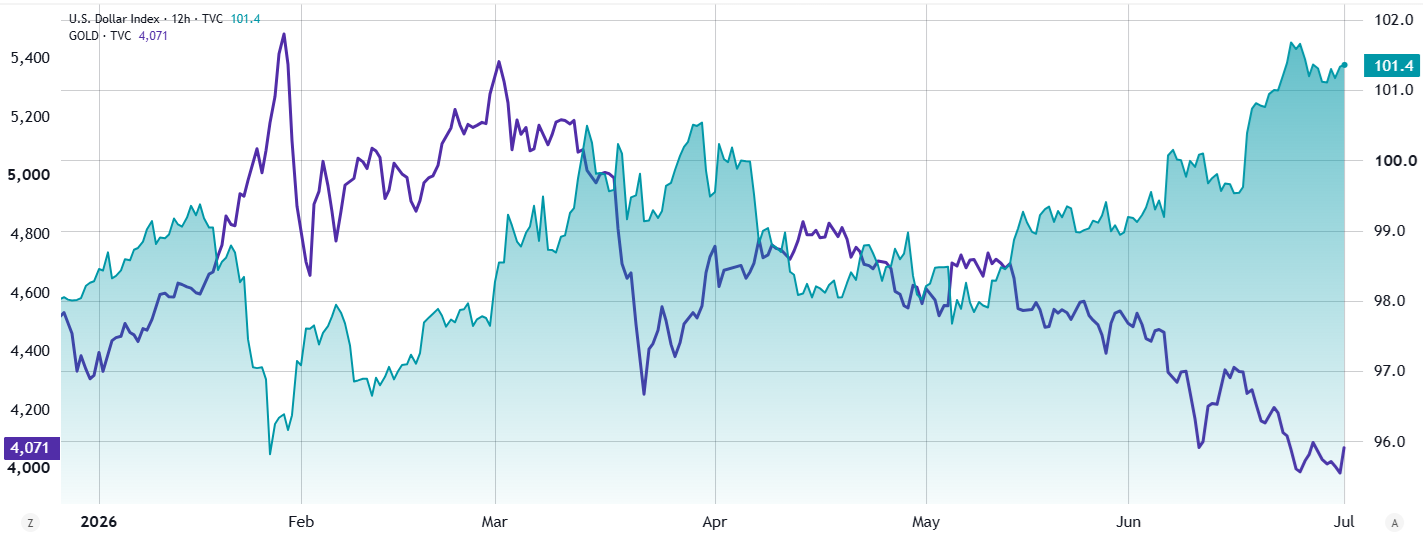
Gold/USD (left) vs US dollar strength (DXY). Source: TradingView
Despite Wednesday’s gains, gold prices are down 12% in two months as the strength of the US dollar (DXY) nears its highest level in a year. This vote of confidence in the US economy is partly due to the strength of the AI sector, as seen in the 25% gain in the Nasdaq 100 index. However, some specific tech subsectors have signaled weakness recently, which could act as a catalyst for Bitcoin and gold.
Could a cooling of the AI sector act as a catalyst for Bitcoin?
Shares of Micron (MU US) and SanDisk (SNDK US) suffered intraday losses of more than 9% on Wednesday after rivals SK Hynix (000660 KR) and Samsung (005930 KR) announced plans to expand production capacity. Still, the move is hardly a trend reversal, as the iShares SOX Semiconductor Index ETF (SOXX US) has gained 78% in three months.
Continued outflow of companies listed on the US stock exchange Funds listed on the Bitcoin exchange (ETF) have dashed bulls’ hopes, reinforcing the negative price spiral as negative news intensifies while positive developments barely register.
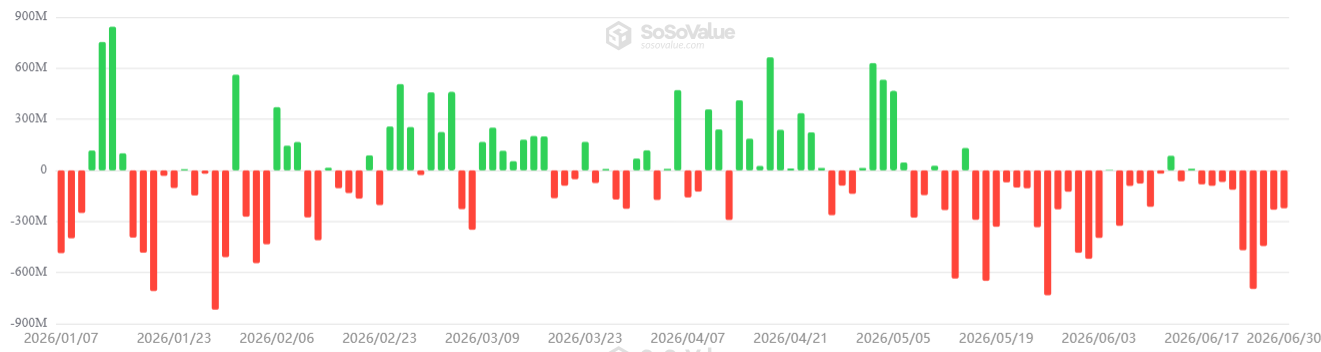
Daily net flows of ETFs listed on the US stock exchange, USD. Source: SoSoValue
Regardless of the reasons for selling, Bitcoin’s weakness, 53% below its all-time high, does not inspire confidence in the $60,000 support level.
Strategy (MSTR USA) increased its cash position to restore fit dividend levels for 17 months on Monday. However, Strategy’s Stretch Variable Rate Preferred Stock (STRC US) price continued to fall low of the $100 target required for additional issuances. STRC’s dividend increased to 12% from 11.5%, which apparently wasn’t enough to attract more buyers.
Related: Bitcoin only 5 thousand dollars from the “best investment opportunity” of the bear market
Bitcoin may have temporarily benefited from Fed Chairman Warsh’s concerns about persistent inflation, but rising expectations for higher interest rates and sturdy earnings momentum in the AI sector could continue to put negative pressure on Bitcoin. As a result, a sustained augment to $65,000 may take longer.
