
Michael Saylor, Strategy’s executive chairman, defended the company’s recent sale of Bitcoin, saying the ability to sell the asset is vital to continuing to issue “digital credit.”
Strategy disclosed its first reported Bitcoin sale since 2022 in a June 1 filing with the U.S. Securities and Exchange Commission, offloading 32 BTC, which seemed to go against Saylor’s long-term “never sell your Bitcoin” rule. mantra.
In an interview with Cointelegraph at the BTC conference in Prague, Saylor said Bitcoin treasury companies must retain the ability to sell shares when necessary to support dividend-paying securities and other Bitcoin-backed credit products.
“If company policy is that we will not sell Bitcoin, the loan will have no value and the equity will have no value,” he said, adding:
The company sells digital loans. The loan is secured by capital. Bitcoin is capital.”
Cointelegraph’s Ciaran Lyons (left) and Strategy founder Michael Saylor (right) at BTC Prague. Source: Cointelegraph
Saylor described products like Strategy’s STRC preferred stock as “digital credit” instruments that employ the company’s Bitcoin balance sheet to service credit obligations. For Strategy, such securities have become the main tool for raising capital to acquire more Bitcoins.
Digital credit is a “trillion-dollar” opportunity for Bitcoin finance, says Saylor
Digital credit markets are emerging as the next “trillion-dollar opportunity” in finance, a development that Saylor believes could enable income-generating digital money products.
“I see Bitcoin as the digital transformation of capital. I see STRC as the digital transformation of credit,” Saylor said, explaining that digital lending products can offer yields of up to 8%, or three to four times higher than established savings accounts.
Related: Saylor downplays Bitcoin’s slide as Strategy faces $11 billion paper loss
Saylor said digital lending products could change the way people view credit markets while injecting billions of dollars into the Bitcoin ecosystem.
He cited projects like Saturn and Apyx as examples of revenue-generating products built on digital credit markets. One of these products recently passed the durability test.
On June 4, the value of Apyx Finance’s dividend-backed synthetic stablecoin (apxUSD) fell to just $0.90, while Bitcoin was trading below $63,000 and STRC stock fell below its $100 par value.
According to Apyx, the decline in STRC, the main backing asset of the stablecoin, lowered the protocol’s reserve value. The company too quoted falling Bitcoin prices, decreasing liquidity and derivatives-driven market dynamics as factors behind the decline.
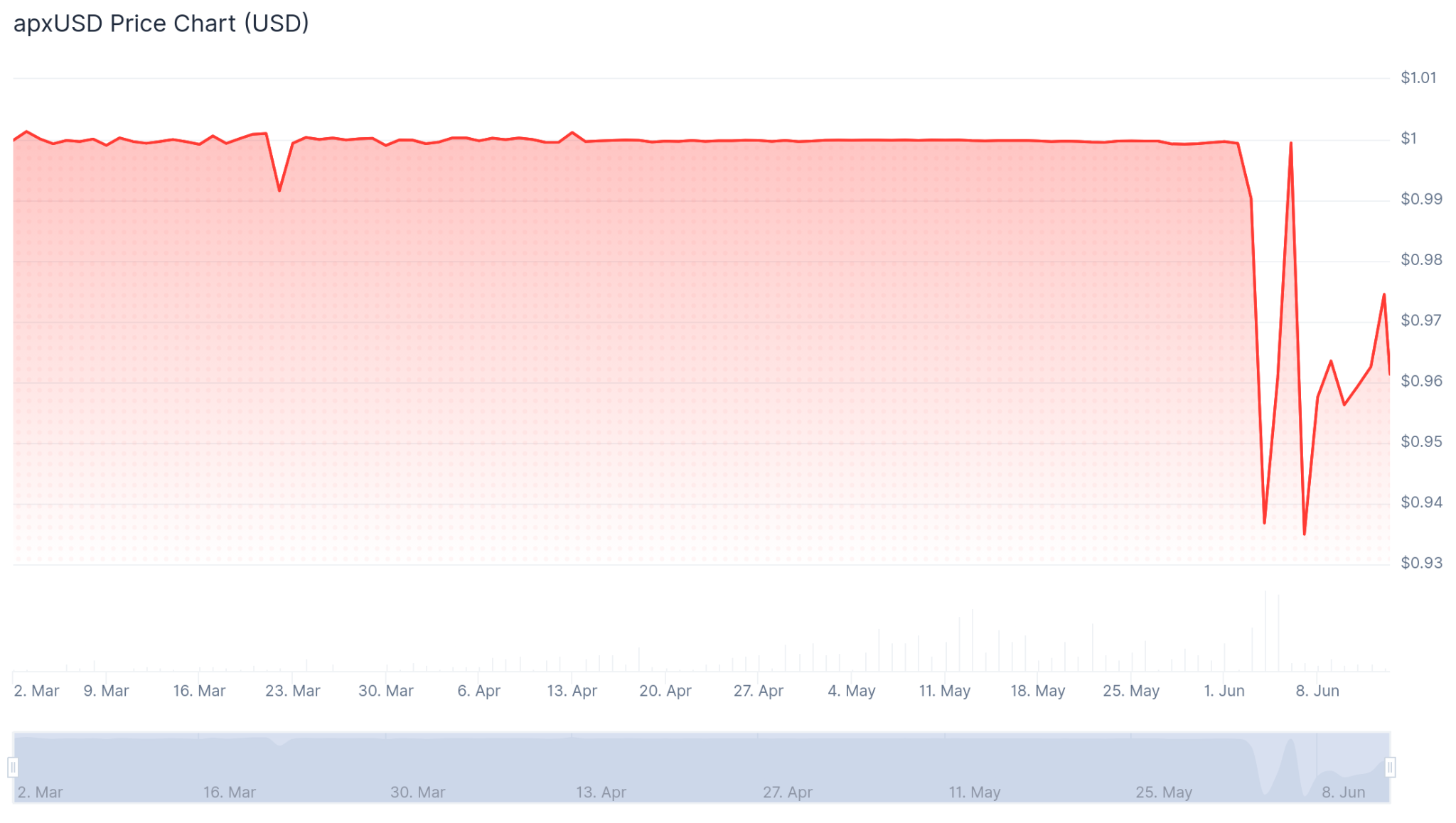
At press time, apxUSD was trading at $0.96, below the pegged level of $1. Source: Coingecko
The full interview with Saylor will be available on the website Cointelegraph YouTube channel in the coming days.
Warehouse: Bitcoin ETFs Bleed $1B, Aave’s $71M ETH Unlock Offer Delayed: Hodler’s Digest, May 10-16
