
Bitcoin (BTC) could face “several months” of declines when the fresh chairman of the US Federal Reserve takes over next month.
Key Points:
- Bitcoin may follow risky assets lower after Kevin Warsh takes over as chairman of the US Federal Reserve.
- President Donald Trump said he “would be” disappointed if there was no interest rate cut in June.
- Wednesday marks current Chairman Jerome Powell’s final rate decision.
Bitcoin price tends to fall after the entry of a fresh Fed chairman
In its latest market report on X, cryptocurrency trading account CRYPTOWZRD warned that fresh downward pressure on BTC prices could return in June.
New Fed Chairman Kevin Warsh is set to take over from Jerome Powell – and the stakes are high for the performance of cryptocurrencies and risk assets.
“Every time a new Fed chairman takes control, the BTC dollar corrects for several months before the real fun begins,” CRYPTOWZRD noted.
“Can it break the curse or end in relegation?”
Monthly BTC/USD chart with Fed chair nominations. Source: CRYPTOWZRD/X
History shows that a change of leadership at the Fed it also puts pressure on stocks — but this year, the S&P 500 index is at an all-time high so far.
The situation is complicated by politics. Powell avoided interest rate cuts – a potential rallying catalyst for cryptocurrencies – even as U.S. President Donald Trump publicly shamed him for not doing so.
Last week in an interview with CNBC, Trump he said that he “would” be disappointed if Warsh didn’t cut interest rates at his first Federal Open Market Committee (FOMC) meeting in June.
Powell’s last FOMC meeting is Wednesday, and markets are unanimous in favor of keeping interest rates at current levels, according to CME Group FedWatch tool.
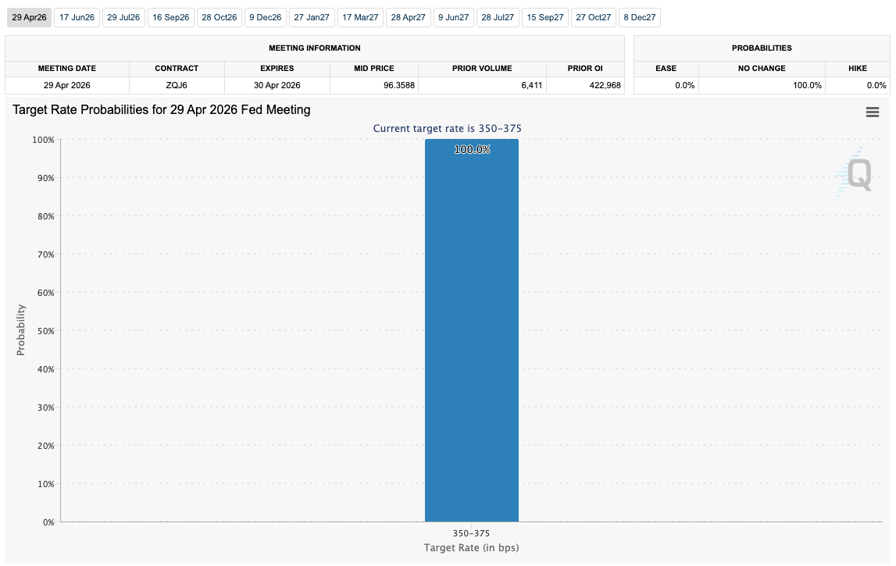
Probability of Fed target rates at the April 29 FOMC meeting (screenshot). Source: CME Group
Warsh is giving traders mixed signals on politics
Cryptocurrency market participants continue to see a potential tailwind for Bitcoin and altcoins thanks to US macro trends.
Related: Bitcoin Bull Score Hits Six-Month High as Fears of a 2022 Bear Market Continue
The Fed began adding funds to its balance sheet this year, a form of liquidity catalyst that has traditionally benefited markets.
“That’s right, the Fed has re-added about $200 billion of U.S. Treasuries to its balance sheet over the last few months,” James Lavish, partner at the Bitcoin Opportunity Fund he wrote that day.
“So much for tightening the money supply. QT is officially over. The light of QE has begun.”
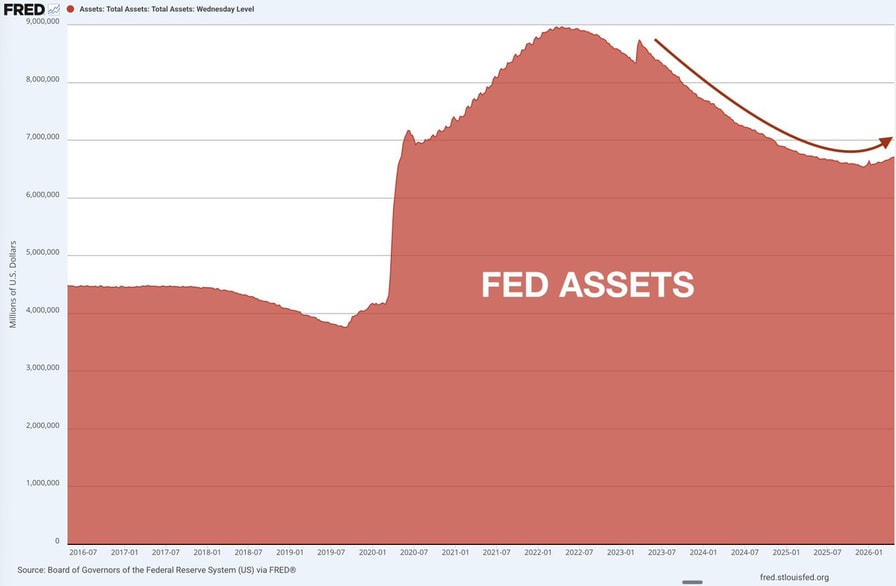
Fed balance sheet data. Source: James Lavish/X
In the last ones YouTube contentMeanwhile, Charlie Bilello, chief market strategist at wealth management firm Creative Planning, revealed what he called a “contradiction” in Warsh’s plans.
“Building the case” for rate cuts, Warsh was critical of the Fed keeping interest rates low during the post-Covid-19 inflation surge in 2021 and 2022.
“It was a ‘fatal political mistake’ – that’s what he said at the time, and I agree with that,” Bilello said.
Warsh also criticized the balance sheet expansion, raising questions about the fate of the growth trend in 2026.
